
Published on Enterseen.com
Rising international oil prices have pushed petrol costs in Pakistan to some of their highest levels in years. In response, Prime Minister Shehbaz Sharif launched the PM Fuel Relief Scheme 2026, a targeted subsidy of Rs. 100 per litre for motorcycles, rickshaws, Qingqis, and small cars with engines up to 800cc. If you’re wondering how to register, who qualifies, and how the process works in your province, this guide covers everything you need.
When Was the Fuel Subsidy Launched?
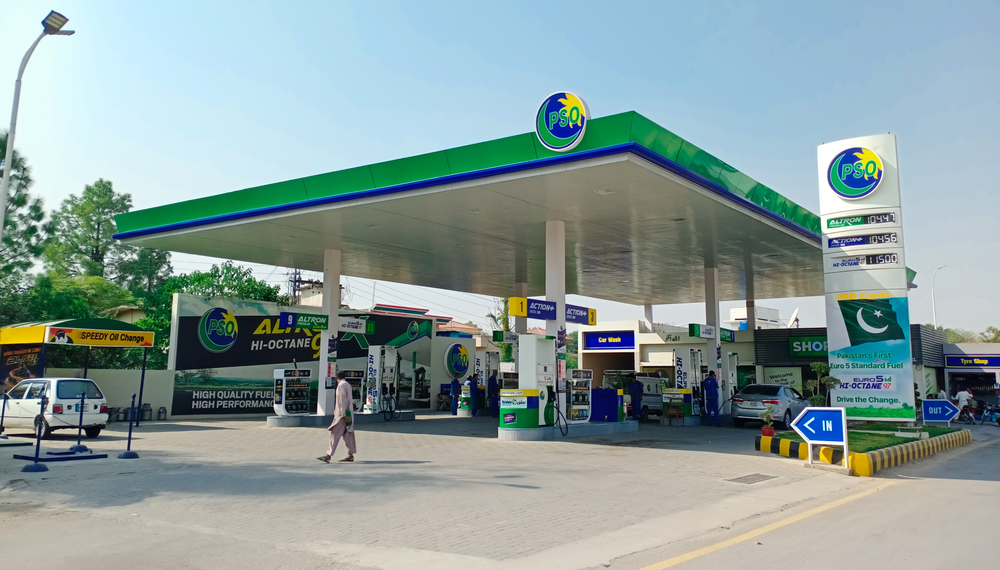
The scheme was officially announced by PM Shehbaz Sharif on September 13, 2026, after another round of petrol price hikes driven by global oil markets. Rollout happened in phases:
- Islamabad Capital Territory: Went live at midnight between September 14–15, 2026, as a pilot run
- Nationwide expansion: Extended to the rest of Pakistan — including Punjab, Sindh, Khyber Pakhtunkhwa, Balochistan, Azad Jammu & Kashmir (AJK), and Gilgit-Baltistan — from midnight on September 16–17, 2026, after the Islamabad trial was deemed successful
This is a separate initiative from earlier fuel relief programs and uses a fully digital, SMS-based registration and token system.
Who Is Eligible for the Fuel Subsidy?
The scheme targets Pakistan’s most price-sensitive commuters:
- Motorcycles, rickshaws, Qingqis, and other two/three-wheelers — eligible for Rs. 100/litre relief on up to 20 litres per month (maximum Rs. 2,000/month)
- Cars with engine capacity up to 800cc (e.g., Suzuki Mehran, Alto, Bolan) — eligible for Rs. 100/litre relief on up to 30 litres per month (maximum Rs. 3,000/month)
Key eligibility notes:
- For motorcycles, rickshaws, and Qingqis, ownership is not mandatory — the government relaxed rules for vehicles bought via “open transfer letters” since many are still registered in a previous owner’s name
- For cars up to 800cc, the vehicle must be registered in the applicant’s own name
- The mobile SIM used for registration must also be registered under the applicant’s own CNIC
- Vehicle age is generally not a barrier — even older motorcycles and cars can qualify
- Each CNIC can register only one vehicle; you cannot multiply benefits by registering several vehicles
- Registration is completely free of cost — the government has repeatedly warned citizens not to pay anyone or share personal details with unauthorized agents
Step-by-Step Registration Process
Registration is done entirely via SMS to the short code 9771 — no app, agent, or office visit is required.
Step 1: Confirm Your Eligibility
Make sure your vehicle is a motorcycle, rickshaw, Qingqi, or a car with an engine up to 800cc, and that you have your CNIC and vehicle registration number ready.
Step 2: Send the Registration SMS
From a SIM registered in your own name, send an SMS to 9771 containing:
- Your 13-digit CNIC number
- Your vehicle registration number (no spaces)
- The first letter/code of the province where the vehicle is registered
- Your vehicle’s registration date
Step 3: Wait for Confirmation
The system cross-checks your details in real time against NADRA records, PTA SIM ownership data, and provincial excise/transport department vehicle records. You’ll receive a confirmation SMS once your registration is verified.
Step 4: Request a Fuel Token Before Filling Up
Each time you need subsidised fuel, send “TOK” to 9771. You’ll receive a numeric token valid for a few hours.
Step 5: Redeem at the Pump
Show the token (and your CNIC, if asked) to staff at any participating petrol station. Pump staff verify the token on their terminal, and you receive fuel at the discounted rate up to your monthly quota. Litres purchased beyond your quota are charged at the regular price.
For 800cc car owners, the quota is typically released as 10 litres every 10 days (three tokens per month, totaling 30 litres), rather than all at once.
Province-Wise Guide
The registration mechanism (SMS to 9771) is identical across Pakistan, but here’s what applies by region:
| Region | Status |
|---|---|
| Islamabad Capital Territory | Pilot launch; live since Sept 14–15, 2026 |
| Punjab | Live since Sept 16–17, 2026 nationwide rollout |
| Sindh | Live since Sept 16–17, 2026 nationwide rollout |
| Khyber Pakhtunkhwa | Live since Sept 16–17, 2026; some districts also run separate provincial fuel support schemes for low-income motorcyclists |
| Balochistan | Live since Sept 16–17, 2026 nationwide rollout |
| Azad Jammu & Kashmir (AJK) | Included in the Sept 16–17, 2026 rollout |
| Gilgit-Baltistan | Included in the Sept 16–17, 2026 rollout |
When registering, you must enter the provincial code matching where your vehicle is officially registered, not necessarily where you currently live.
Important Tips
- Registration is a one-time process — you don’t need to re-register every month
- Report any issues via the 24-hour helpline by calling 9771
- Never share your CNIC, vehicle details, or token with unauthorised individuals or third parties claiming to “help” for a fee
- Petrol pump staff use a token-validation app; if the system malfunctions at the pump, that can also be reported through the helpline
The key fact that matters here
The scheme has two separate eligibility rules, and your two vehicles fall on opposite sides of it:
| Vehicle | CC | Eligible? |
|---|---|---|
| Motorcycle (100cc) | Any engine size | ✅ Yes — motorcycles have no cc cap |
| Car (1000cc) | Must be ≤800cc | ❌ No — your car is over the limit |
So your car gets zero benefit from this scheme, no matter what. Only cars up to 800cc (Alto, Mehran, Bolan-type) qualify for the 30L/month relief. There’s no workaround for that — it’s a hard cutoff.
How you can still actually benefit
Since the bike is eligible regardless of engine size, the real question is how to not let that benefit go to waste:
1. Register the bike anyway — it costs nothing.
Text your CNIC, the bike’s registration number, province code, and registration date to 9771. It’s free, takes a minute, and there’s no downside to having it registered even if you rarely ride it.
2. Actually start using the bike for short, local trips.
This is the only way the subsidy becomes real money in your pocket. Grocery runs, nearby errands, picking up kids from a close school, short commutes — swap the car for the bike on trips under a few kilometers. At the full 20L/month quota, that’s up to Rs.2,000/month in real savings, but only if you actually burn that fuel in the bike.
3. Let someone else in the household drive it regularly.
If you genuinely won’t ride it yourself, a spouse, sibling, or someone else in the house who does daily local errands can use it under your registration (ownership isn’t required for two-wheelers — the government relaxed that rule). The savings still land in your household budget, just via someone else’s mileage.
What won’t work (and why)
- You can’t register the car instead — it’s over 800cc, full stop.
- You can’t register both vehicles for double the benefit — the scheme is one vehicle per CNIC.
- You can’t fill the bike’s token quota and pour that fuel into the car — tokens are tied to the specific registered vehicle, pumps dispense against that vehicle, and trying to siphon/transfer fuel this way isn’t how the system is designed to work, isn’t safe, and isn’t really “using” the subsidy as intended.
Bottom line
Your car will keep paying full price at the pump regardless. The bike is essentially free money sitting on the table — up to Rs.2,000/month — but only if it actually gets ridden. If it just sits in the garage, registering it changes nothing.
Final Thoughts
The PM Fuel Relief Scheme 2026 offers real monthly savings — up to Rs. 3,000 for small car owners and Rs. 2,000 for motorcycle and rickshaw users — through a simple, free SMS-based process. Since the scheme rolled out, millions of citizens have already registered, with small vehicle and motorcycle owners making up the vast majority of applicants. If you own a motorcycle, rickshaw, or a car up to 800cc, registering takes less than a minute and could meaningfully cut your monthly fuel costs.
Disclaimer: Scheme details, quotas, and procedures may be revised by the Government of Pakistan. Always verify the latest information through official government channels or the Ministry of IT & Telecommunication before relying on this guide.